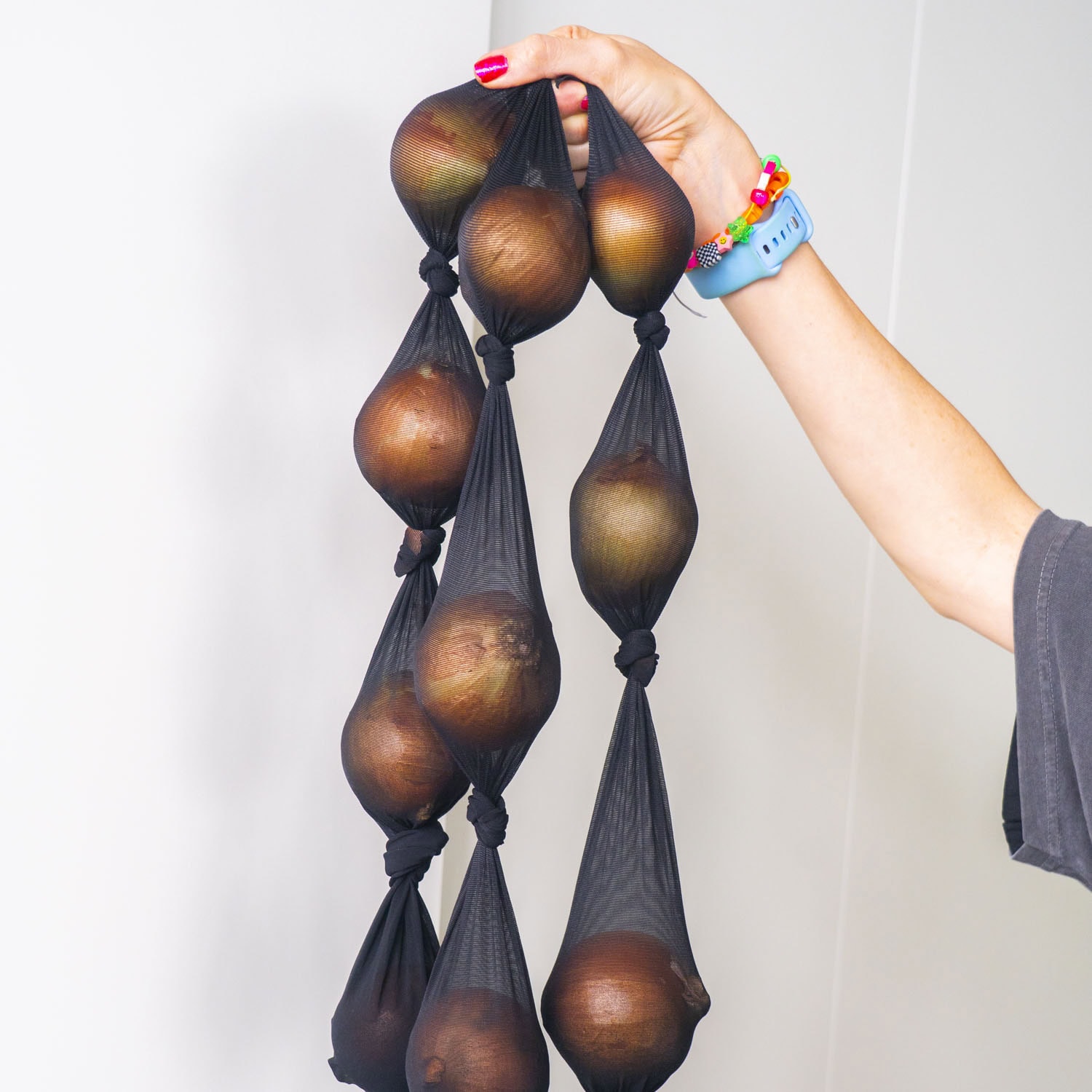
Unlock Months of Freshness: The Ultimate Pantyhose Onion Storage Guide
Are you tired of finding your freshly bought or homegrown onions sprouting on the counter, softening in the pantry, or even worse, rotting away? You’re not alone. Many home cooks and gardeners face the perennial challenge of extending the shelf life of this kitchen staple. While modern solutions often involve specialized containers or refrigeration, an ingenious, old-fashioned hack using an everyday item offers a remarkably effective solution: pantyhose. Learning how to store onions using pantyhose is a game-changer, promising to keep your onions firm, fresh, and flavorful for up to six months, all without needing any fancy equipment.
This surprising storage method, passed down through generations, leverages simple principles of airflow and separation to prevent the common culprits of onion spoilage. Whether you've harvested a bountiful crop from your garden or simply stocked up during a sale, mastering the pantyhose onion storage technique will save you money, reduce food waste, and ensure you always have a perfectly preserved onion ready for your next culinary creation.
Why Pantyhose Works Wonders for Onion Longevity
At first glance, the idea of storing onions in hosiery might seem peculiar. However, the effectiveness of the pantyhose method lies in its ability to create an optimal environment for long-term preservation, tackling the very issues that lead to early spoilage:
- Superior Air Circulation: Unlike airtight containers or bags that trap moisture and ethylene gas (a ripening hormone), the sheer, breathable fabric of pantyhose allows for excellent air circulation around each individual onion. This prevents the buildup of humidity, which is a primary catalyst for mold growth and softening.
- Individual Separation: By tying knots between each onion, you create a segregated storage system. This is crucial because if one onion begins to spoil, the spoilage is contained and doesn't quickly spread to its neighbors. In traditional bulk storage, one bad onion can quickly compromise an entire batch.
- Darkness and Coolness: When hung in a suitable location, the pantyhose naturally encourages storage in the recommended cool, dark, and dry conditions. This environment inhibits sprouting (caused by light and warmth) and slows down metabolic processes that lead to decay.
This ingenious trick is a testament to the power of simple solutions. It’s an easy, low-cost approach that consistently outperforms many other home storage methods, keeping your onions fresh and intact for months on end.
The Critical First Step: Curing Your Onions for Long-Term Storage
Before you even think about threading your onions into pantyhose, the most crucial step for successful long-term storage is proper curing. Curing hardens the outer skins and dries the neck of the onion, forming a protective barrier that seals in moisture and keeps out pathogens. Skipping this step is a common mistake that severely limits an onion's shelf life, regardless of the storage method.
How to Cure Onions Effectively:
- Harvesting Wisely: Onions are ready to harvest when their tops (leaves) begin to yellow and fall over. Gently dig them up, being careful not to bruise the bulbs. Bruising can create entry points for bacteria and accelerate spoilage.
- Initial Drying: Lay your harvested onions in a single layer on a clean, dry surface. A well-ventilated area is key – this could be a porch, garage, shed, or even indoors if you have sufficient air circulation. Crucially, avoid direct sunlight and high humidity during this phase. Direct sun can cook the onions, affecting their flavor and storage potential.
- The Curing Process: Allow the onions to cure for 2 to 4 weeks. During this time, the outer skins will dry and become papery, and the neck where the leaves meet the bulb will shrivel and completely close off. Do not remove the leaves during this initial curing period, as they continue to draw nutrients into the bulb as they dry.
- Assessing Readiness: You'll know an onion is fully cured when its neck is completely dry and tight, its outer skins are papery and rustle when touched, and it feels firm throughout. Any onion with a soft spot, green top, or signs of moisture or mold should be set aside for immediate consumption and not stored long-term.
This meticulous curing process is vital, especially for home gardeners. It prepares the onion's natural defenses, making it resilient enough to withstand months in storage, ready for when you need it. For more detailed guidance on preserving your harvest, you might find How To Store Onions For Months: The Pantyhose Storage Hack a valuable read.
Choosing the Best Onion Varieties & Your Step-by-Step Pantyhose Guide
Selecting Your Onions for Extended Storage
While the pantyhose method works for most onions, some varieties are inherently better suited for long-term storage than others. Generally, pungent varieties with thicker skins tend to store longer than sweeter, milder types. This is largely due to their higher content of sulfurous compounds, which act as natural preservatives. Mild onions, lacking these compounds, are best consumed within a few weeks of harvest.
- Yellow Onions: These are the champions of long-term storage. Varieties like Ebenezer, Yellow Globe, and Downing Yellow Globe are excellent choices. Their robust flavor and thick papery skins make them ideal for extended keeping.
- White Onions: Certain white varieties, such as Southport White Globes, also store well, especially if they have small, tight necks.
- Red Onions: While some red onions (e.g., Southport Red Globe, Wethersfield) can be stored for several months, they generally don't last as long as yellow varieties. Sweet red onions, often used for salads, should be consumed more quickly.
- Avoid: Sweet onions (like Vidalia, Walla Walla) and green onions are not suitable for this method and should be eaten fresh or stored in the refrigerator for a shorter period. Always prioritize autumn-harvested onions for long-term storage, as they are bred to withstand winter conditions.
The Simple Steps to Store Onions in Pantyhose:
Once your onions are perfectly cured and you've selected the best varieties, it's time for the "pantyhose snake" technique. Don't worry if your pantyhose has a few runs; its structural integrity for this purpose remains unaffected!
- Prepare the Pantyhose: Take a clean pair of pantyhose. Lay it flat and use scissors to snip off each leg right at the top of the thigh, creating two long tubes. If the toe of the pantyhose isn't already sealed, tie a secure knot at one end of each leg to create a closed 'bottom'. The waistband section can also be used if desired, by cutting it into a loop and tying one end.
- Insert the First Onion: Gently drop one cured onion into the leg, letting it fall to the knotted end.
- Tie a Separating Knot: Immediately above the first onion, tie a firm knot in the pantyhose. This creates a secure compartment for the onion and separates it from the next one.
- Repeat the Process: Drop in the next onion, and tie another knot directly above it. Continue this pattern until the pantyhose leg is full, or you run out of onions for that leg. Leave enough space at the top to tie a final knot.
- Secure and Hang: Tie a strong knot at the open end of the pantyhose to seal the last onion in. Your onion 'snake' is now ready to be hung!
Optimizing Your Onion Storage Environment
The success of the pantyhose method, and indeed any long-term onion storage, hinges on providing the right environment. Remember the mantra: cool, dark, and dry.
- Cool Temperatures: Ideal storage temperatures for onions range from 45-55°F (7-13°C). This temperature range slows down the onion's metabolic processes, preventing sprouting and decay. Basements, cool garages, or unheated pantries are perfect spots. Avoid extremely cold temperatures (like refrigerators) for whole, raw onions, as the humidity can lead to softness and mold.
- Darkness: Exposure to light encourages onions to sprout. Always store your onion snake in a dark location to prevent premature sprouting, which quickly diminishes their quality and firmness.
- Dry Air: Humidity is the enemy of stored onions, promoting mold and bacterial growth. Ensure your chosen storage area is well-ventilated and has low humidity. A damp basement, for instance, would be unsuitable unless a dehumidifier is used.
Once hung, your onion snake becomes a convenient dispensing system. When you need an onion, simply snip the pantyhose directly below the desired onion. This keeps the rest of your onions sealed and undisturbed, maintaining their optimal storage conditions. With proper curing and an ideal environment, your onions stored this way can truly last up to six months, offering incredible convenience and freshness. For more insights on maximizing onion shelf life, take a look at Keep Onions Fresh Up To 6 Months: The Easy Pantyhose Trick.
Conclusion
The humble pantyhose, often overlooked in the kitchen, emerges as a surprisingly powerful tool for long-term onion storage. By embracing this traditional, cost-effective method—combined with proper onion curing and an ideal storage environment—you can say goodbye to wasted onions and enjoy the convenience of fresh, firm bulbs for months. This simple trick not only extends the life of your produce but also connects you to a timeless wisdom of food preservation, proving that sometimes, the most effective solutions are the simplest ones. So next time you're stocking up on onions, remember this ingenious hack and transform your storage game forever!
