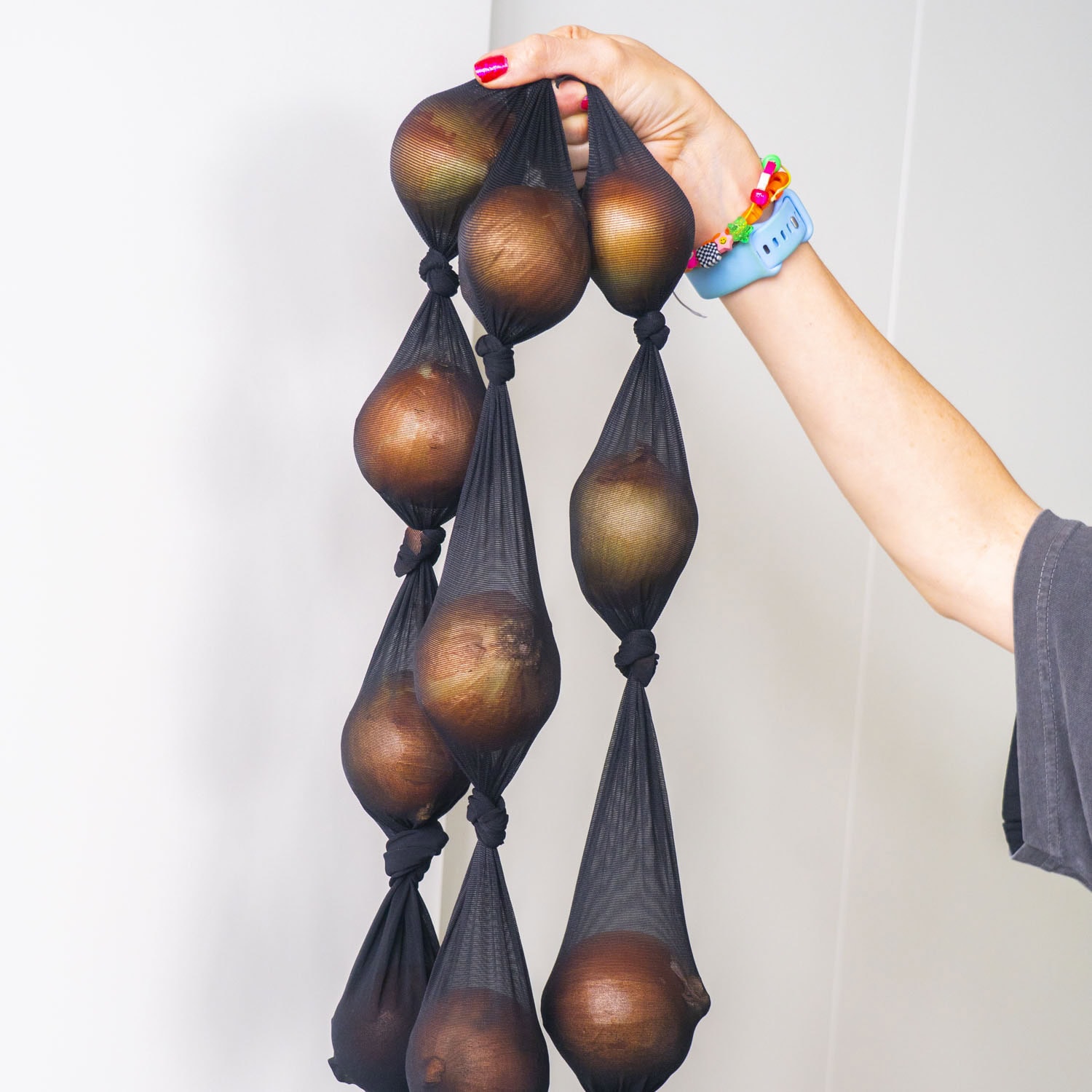
Are you tired of finding sprouted onions on your counter or soft, rotting bulbs in your pantry? If you're a home gardener with a bountiful harvest or a savvy shopper who buys in bulk, proper onion storage is essential for minimizing food waste and maximizing your grocery budget. While many conventional methods fall short, there's an ingenious, old-fashioned hack that consistently delivers months of freshness: using pantyhose. Yes, those sheer leg garments are not just for fashion; they're an unexpected hero in the world of long-term food preservation. Discover the surprising secret to keeping onions fresh for up to 6 months with this simple, cost-effective trick.
The Genius Behind the Pantyhose Storage Method
Why would a pair of pantyhose be the answer to your onion storage woes? The magic lies in its unique ability to provide the ideal environment for onions, mimicking the conditions that allow them to thrive over winter. Unlike airtight containers or mesh bags where onions can bruise and humidity can build up, pantyhose offer excellent airflow and individual separation. Each onion is individually cradled and separated by a knot, preventing them from touching each other. This separation is crucial; if one onion starts to spoil, it won't immediately affect its neighbors, as often happens when onions are piled together.
The breathable, stretchy fabric also allows essential air circulation around each bulb. This continuous airflow prevents moisture buildup, which is the primary culprit behind sprouting, mold growth, and premature rotting. By ensuring consistent ventilation and physical separation, this method leverages natural principles, offering a low-tech yet highly effective solution for how to store onions using pantyhose for an extended period without fancy equipment or constant monitoring.
Choosing and Curing Your Onions for Maximum Longevity
Before you even consider reaching for the pantyhose, selecting and preparing your onions correctly is paramount. Not all onions are created equal when it to long-term storage, and proper curing is a non-negotiable step that sets the foundation for success.
Selecting the Right Onion Varieties
For the longest shelf life, prioritize pungent varieties over sweeter ones. The sulfurous compounds responsible for an onion's sharp taste and tear-inducing qualities are also natural preservatives that aid in their long-term keeping. Mild onions, with their higher water content and thinner skins, simply don't have the same built-in preservation system.
- Yellow Onions: Often referred to as "storage onions," varieties like Ebenezer, Yellow Globe, and Downing Yellow Globe are excellent choices. Their robust, papery skins and strong flavors make them ideal for extended keeping. These are typically harvested in autumn.
- White Onions: While generally good, ensure they have small, firm necks. Varieties like Southport White Globe can store well, but always inspect for any green shoots or softness.
- Red Onions: Some red varieties, such as Southport Red Globe and Wethersfield, also possess good storage qualities, though they may not last quite as long as yellow onions.
- Avoid: Sweet onions (like Vidalia or Walla Walla) and spring/summer-harvested onions have higher water content and milder flavors, meaning they should be consumed within a few weeks of harvest. Save these for immediate use in salads or dishes where their sweetness can shine.
The Crucial Step of Curing
Curing is the process of drying the outer skins and necks of freshly harvested onions, preparing them for dormancy and long-term storage. This step hardens the outer layers, seals the neck (where moisture can easily enter), and prevents moisture from permeating the bulb, significantly extending shelf life. Without proper curing, even the best storage onion will quickly spoil.
- Harvesting: Harvest onions when their tops have fallen over and started to yellow and dry out. Avoid pulling them prematurely.
- Spreading: Lay your harvested onions in a single layer on a clean, dry surface in a well-ventilated area. A porch, garage, shed, or even an open-air gazebo works perfectly. Leave their leafy tops attached during this stage.
- Drying Conditions: Ensure the area is free from direct sunlight and humidity. Direct sunlight can scorch the onions and negatively impact their flavor, while humidity encourages mold and rot. Good air circulation is paramount.
- Duration: Allow onions to cure for 2-4 weeks. During this time, the outer skins will become dry, papery, and tight, and the neck will thoroughly dry and constrict. The green tops will wither completely.
- Inspection: After curing, gently brush off any loose dirt but do not wash the onions. Check each onion carefully. Only store those that are firm, fully dry, and free from soft spots, cuts, or mold. Any onion with green shoots, a soft neck, or signs of damage should be eaten promptly.
For more in-depth information on selecting and preparing your onions, including visual cues for properly cured bulbs, refer to our comprehensive Pantyhose Onion Storage Guide: Best Types & Curing For Longevity.
How To Store Onions Using Pantyhose: A Step-by-Step Guide
Now that your onions are perfectly cured and ready, it's time to put the pantyhose hack into action. This process is surprisingly simple, cost-effective, and requires no special equipment beyond what you might already have.
- Gather Your Supplies: You'll need clean, dry, fully cured onions and a clean pair of pantyhose (any denier will do, even those with minor runs or holes, as long as they hold the weight). Scissors are also helpful for preparing the hose.
- Prepare the Pantyhose: Lay the pantyhose flat on a surface. Using scissors, cut off each leg right at the top of the thigh, creating two long, tubular sections. You can also use the waistband section, but the legs are generally more versatile and easier to manage. If the toe opening of each leg isn't already closed, tie a tight knot at the very end to create a sealed bottom.
- First Onion In: Drop one of your prepared onions into the foot of one pantyhose leg. Gently push it down so it rests securely at the bottom knot.
- Tie a Separating Knot: Immediately above the first onion, tie a firm, snug knot in the pantyhose. This creates a separate compartment for each bulb, preventing direct contact and ensuring optimal airflow around each one. This isolation is key to preventing spoilage from spreading.
- Repeat the Process: Add another onion just above the knot you just tied. Then, tie another knot above that second onion. Continue this pattern – adding an onion and tying a knot above it – until the pantyhose leg is full or you run out of onions. You'll end up with a distinctive, multi-bulb "snake" or "sausage" of onions.
- Create Your Onion Snakes: Repeat the entire process with the second pantyhose leg, and any additional pairs of pantyhose you have, until all your cured onions are individually sectioned.
- Hang for Storage: Find a cool, dark, and dry location to hang your onion snakes. Ideal spots include a pantry, basement, root cellar, garage, or even a seldom-used closet. Ensure the temperature remains consistent, ideally between 40-50°F (4-10°C), and humidity is low. Avoid placing them near heat-generating appliances or windows that get direct sunlight.
- Snip and Use: When you need an onion for cooking, simply snip the pantyhose just below the lowest onion with a pair of scissors. The rest of your onion chain will remain intact and sealed, ready for future use.
Maximizing Longevity: Essential Tips for Success
Even with the pantyhose method, a few extra considerations can make all the difference in achieving that impressive 6-month shelf life, or even longer in ideal conditions.
- Location, Location, Location: Reiterate the paramount importance of a cool, dark, and dry environment. Consistent temperatures and low humidity are the enemies of stored onions. Avoid areas near heat sources like ovens, dishwashers, water heaters, or sunny windows.
- Ventilation is Key: While pantyhose provide good ventilation for individual bulbs, ensure the storage area itself also has good overall air circulation. Don't pack the hanging onion chains too tightly together, allowing air to move freely around them.
- Keep Them Separated (from Potatoes): This is a golden rule of storage! Never store onions with potatoes. Potatoes release moisture and ethylene gas, which can cause onions to sprout prematurely and spoil faster. Conversely, onions can impart their flavor to potatoes and cause them to spoil more quickly too. Store them in separate areas of your pantry or storage space.
- Regular Inspection: Even with the best precautions, occasionally one onion might go bad. Periodically check your hanging onions (perhaps once a month). If you notice any soft spots, mold, an unusual smell, or any signs of decay, snip off the affected onion immediately to prevent the spread to others in the chain.
- Avoid Refrigeration (for whole, uncured onions): The refrigerator's cold, humid environment is generally detrimental to whole, uncured onions. It can make them soft, reduce their flavor, and accelerate spoilage by encouraging sprouting. Only refrigerate cut onions, and then only for a few days in an airtight container to prevent odor transfer.
Say goodbye to wasted onions and hello to a pantry stocked with fresh, firm bulbs for months to come. The pantyhose storage hack is a testament to the power of simple, time-tested methods. By understanding the importance of proper onion selection, thorough curing, and leveraging the breathable, separating qualities of pantyhose, you can significantly extend the life of your harvest or bulk purchase. This ingenious technique for how to store onions using pantyhose not only saves money and reduces waste but also connects you to a clever, sustainable way of food preservation. Give it a try – you might just wonder how you ever managed without this surprising storage secret!
